The Careless Habits That Ruin Mental Health Before You Even Notice.
The Loss You Don’t See Coming
Have you ever looked back and realised you weren’t destroyed by chaos… but by inattention?
Not one big decision. Just small, quiet ones.
The skipped meals. The unread messages.
The way you told yourself, “I’ll deal with it tomorrow.”
That’s how it happens.
The most damaging losses don’t start with a big bang —
They creep in through carelessness.
Not dramatic, just daily.
Not reckless, just repeated.
Burnout. Emotional relapse. That heavy numbness you couldn’t name until it was everywhere.
And if you’re here now, quietly wondering where the time or energy went —
You’re not alone.
This isn’t about blame.
It’s about reclaiming what’s still within reach.
One choice at a time.
One moment of care, right now.
Carelessness Isn’t Harmless — It’s How We Drift
The hardest part about carelessness is that it doesn’t feel dangerous. It’s not loud or urgent. It’s just easy.
You skip one morning routine. Push back that hard conversation. Numb out with your phone instead of facing what hurts. And before you know it, weeks have passed. You’re tired, disconnected, unsure how you got here.
That’s the trap: it feels like nothing — but it adds up to everything.
Carelessness shows up quietly: In forgotten boundaries. In self-talk that spirals. In routines that slip through your fingers when life gets heavy. It doesn’t break you all at once — it slowly erodes who you were becoming.
Most people think burnout or emotional collapse happens suddenly. But the truth is, it usually starts with these small, repeated moments of inattention. It’s not that you don’t care. You just stopped noticing.
And noticing is the first step back
The Cost of Not Paying Attention
It’s easy to underestimate what you’re ignoring—until the consequences show up.
Carelessness doesn’t just steal your time.
It steals your clarity.
It delays your healing.
It breaks trust—first with yourself, then with others.
And over time, it wears down your body, your mind, and your sense of direction.
A $125 million NASA orbiter was lost in space because two teams used different units of measurement. One used inches. The other used centimeters. That tiny oversight caused an entire mission to vanish.
Most of us don’t lose spacecraft.
We lose years.
To burnout that could’ve been prevented.
To relationships we stopped tending.
To dreams we said “later” to, over and over.
Childhood emotional neglect, when left unaddressed, is linked to lifelong depression and anxiety. The pain doesn’t disappear just because we look away. It lingers. It grows.
What we ignore compounds.
What we attend to transforms
From Numbness to Noticing
“I didn’t burn out overnight — I ignored the 37 small signs that came before it.”
That was the moment it hit me.
It wasn’t one big failure.
It was a pattern of small avoidances:
Forgetting to eat.
Saying “I’m fine” when I wasn’t.
Telling myself I’d rest “after this one thing.”
That’s how numbness begins — as convenience.
Until one day, you realize you’ve become a stranger to your own needs.
The shift started with radical noticing.
Noticing how my jaw tensed before I answered an email.
How I always felt “busy,” but rarely present.
How I was constantly exhausted but never truly rested.
Care isn’t control.
It’s not about perfect routines or bulletproof discipline.
It’s about presence.
It’s about paying attention — before the damage becomes irreversible.
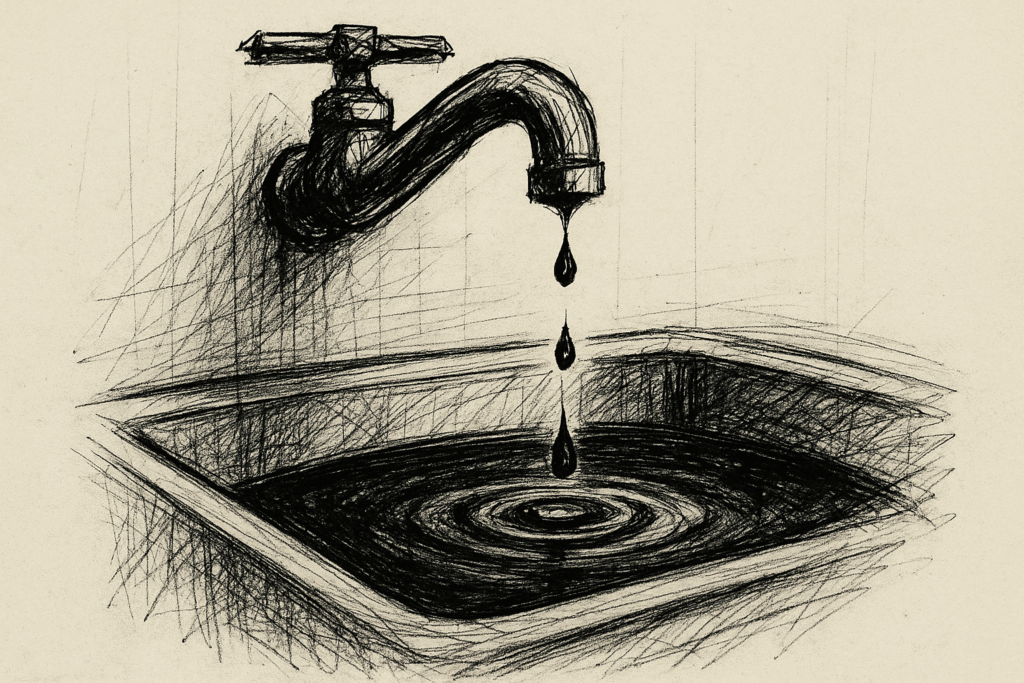
A boat doesn’t sink from one wave.
It sinks from the slow leak you refused to look at.
How to Stop the Silent Slide
The good news? You don’t need a full life overhaul to stop the drift.
You just need to start noticing where it begins — and responding with care.
Here are five simple but powerful ways to interrupt the slow slide of neglect:
1. Name the Leaks
Create your own “carelessness audit.”
Ask yourself:
- Where am I leaking energy?
- What needs do I skip without noticing?
- When do I feel most checked out or numb?
🗣️ Micro-script: “When do I feel numb or disconnected each day?”
Write it down. Awareness is the first repair.
2. Anchor Your Days
Choose one small, non-negotiable act of presence — even if it’s just one minute long.
Try: morning journaling, a deep breath before scrolling, a 5-minute body scan after lunch.
🗣️ Reminder: “Even brushing your teeth while fully present is an act of resistance.”
This isn’t about control. It’s about choosing presence on purpose.
3. Use the 3-Minute Pause
Whenever you feel off, overwhelmed, or overstimulated — stop.
Take 3 minutes and ask:
🗣️ “What am I avoiding right now?”
This moment of reflection can stop you from defaulting to distraction — and start building emotional fluency.
4. Time-Travel with Intention
Write a short letter from your future self.
Ask:
- What would I regret not paying attention to today?
- What gentle discipline would change everything over time?
You’ll often find your answers are already within you — waiting to be heard.
5. Build a Care Contract
Create a simple, visible message for yourself — on your lock screen, desk, or mirror.
Something like:
🗣️ “My peace costs presence.”
or
🗣️ “Today deserves care.”
Make it your anchor when things get loud, fast, or overwhelming
It’s Not Too Late to Come Back to Yourself
If your days feel foggy… if you keep slipping into old habits… if care feels out of reach — it doesn’t mean you’ve failed. It means you’ve been distracted in a world designed to pull you away from what matters.
Living with intention in this kind of world is hard. It takes effort just to slow down. It takes strength to pay attention. But even now, there’s space to return.
You can begin again — as many times as you need to. That return doesn’t need to be dramatic. It might look like closing your eyes for a breath. Or finally writing down what’s been sitting in your chest.
Each moment of awareness is an act of self-respect. Each small choice to care is a quiet rebuilding. And no matter how far you’ve drifted — it’s not too late.
Reclaim What’s Still Yours
Not all losses are unavoidable.
The most disgraceful kind — the ones that come from carelessness — don’t have to happen.
They build slowly, quietly.
But that means they can be undone the same way: with care, presence, and attention.
You don’t need to fix everything overnight.
You just need to start noticing.
One breath. One check-in. One act of care.
Because care is the quiet discipline that saves us.
If you’re ready to stop drifting, start here:
📥 Download the free self-awareness journaling toolkit — designed to help you reconnect with what matters, one page at a time.
💬 Comment below: What’s one small habit you’ve been ignoring?
🔁 Share this post if it resonated — it might help someone else catch their own silent slide before it becomes a collapse